Why Is Valorant So Addictive For Duelist Players Who Love Rawzu Style Clips
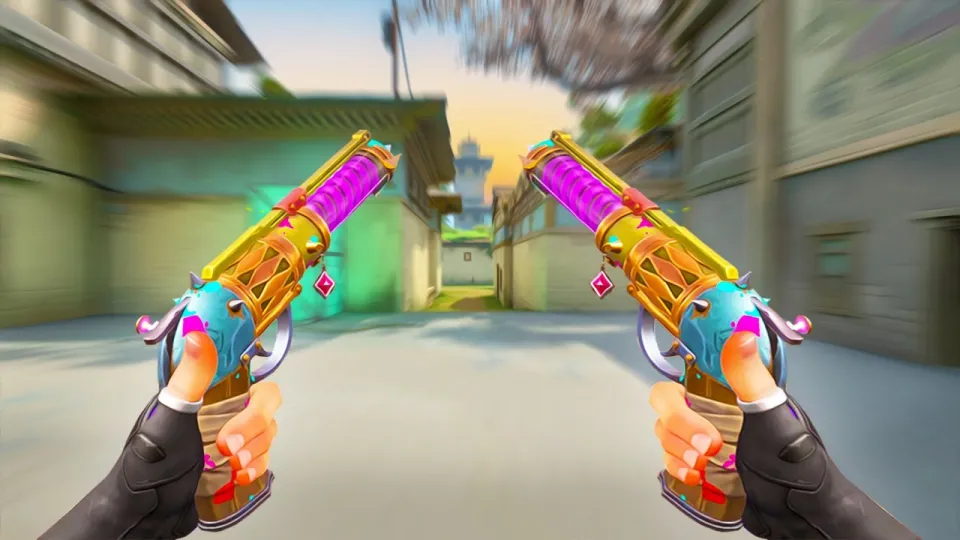
Video: 20 Minutes of Satisfying Valorant Clips
You can order the same kind of articles for your own video to boost it on YouTube and Google. Just message the Telegram bot @sat_sit_bot. Articles with your video embedded are written and posted by the bot itself — on popular topical sites (no ads). Free trial — 50 articles.
· based on the channel Rawzu
Valorant is addictive because it compresses a full tactical shooter round into a short, high-stakes loop where one duelist pick can decide the entire round. The agent Phoenix, aggressive movement, and a satisfying clip format like Rawzu's "20 Minutes of Satisfying Valorant Clips" show exactly how that loop works: fast entries, clean crosshair placement, and instant feedback. Rawzu streams that same style daily on Kick, where the movement and aim you see in the clips get tested live against real opponents.
What makes Valorant so satisfying to watch and play
The core appeal of Valorant is that every round is a small puzzle solved with aim, utility, and timing under pressure. A satisfying clip usually captures three things at once: a fast entry into a contested site, a clean one-tap, and a teammate reaction that confirms the play was as good as it looked. That is why a 20-minute compilation of Phoenix gameplay can hold attention longer than a highlight reel of random kills — the viewer follows a single playstyle and learns its rhythm.
Riot's tactical shooter rewards repetition. The same angles get held, the same utility gets traded, and the same duels repeat across Lotus and Icebox until a player's crosshair placement becomes automatic. When that automation clicks, the game stops feeling like a fight against the map and starts feeling like a fight against the other player's decisions.
Phoenix explained for players who want to play aggressively
Phoenix is an offensive VALORANT agent who specializes in hunting down enemies while crippling their ability to fire back. His kit is built around taking space and surviving the trade, which is why duelist mains who like to push first tend to gravitate to him.
- Blaze creates a wall that blocks vision and deals damage, letting Phoenix cross open areas that are normally covered by snipers or holding angles.
- Curveball throws a flash that curves around corners, so it can blind defenders even when they are hiding behind cover.
- Hot Hands throws a fireball that damages enemies and heals Phoenix when he stands in his own flames.
- Run it Back is the ultimate: Phoenix marks his position, dies or takes damage, and respawns at the mark with full health if he is killed during the duration.
Together, Hot Hands and Run it Back make Phoenix a very durable duelist. He can entry, take a fight he should lose, and still come back with information or a kill. That durability is what makes aggressive Phoenix gameplay readable in clips: the viewer always knows whether the player is committed or baiting.
Rawzu settings, sensitivity, and crosshair breakdown
Rawzu's setup is a useful reference point because it is deliberately built around fast movement and stretched visuals. His sensitivity is 400 DPI with 0.625 in-game, on a 1440x1080 stretched resolution. That combination gives slower, more controlled mouse movement with a wider-looking enemy model, which many duelist players prefer for tracking and flicking onto heads.
The rest of the setup matches the same philosophy:
- Crosshair: 1-6-2-2
- Mouse: Lamzu Maya X
- Mousepad: Zowie H-SR-SE 2 Blue
- Monitor: Zowie XL2566K 360Hz
A 360Hz monitor matters more than it sounds for a game like Valorant. Higher refresh rate reduces the delay between an enemy peeking and that enemy appearing on screen, which is exactly the window where duelists win or lose fights. The stretched resolution is a preference, not a requirement, but it does change how wide targets look relative to their height.
How to build aim and movement like a duelist main
Good Valorant aim is less about raw flick speed and more about preparation before the fight starts. The clips that feel most satisfying usually follow the same pattern: the player is already aimed where the enemy's head will appear, the strafe stops before the shot, and the utility is thrown to force the enemy into that angle.
A practical routine for building this:
- Pick one agent, such as Phoenix, and play ten matches without switching.
- Warm up with counter-strafe drills: move left, tap right, shoot, and repeat until stopping feels instant.
- Practice one-taps at head level on a static range before every session.
- Review your own deaths and note whether you were moving while shooting or holding a predictable angle.
- Copy a crosshair and sensitivity that feel stable, then stop changing them for at least a month.
Movement speed is the part most players underestimate. Watching a fast duelist, the temptation is to copy the strafe pattern without copying the discipline behind it. The speed only works because the shots come after the movement stops, not during it.
Why the satisfying clip format works so well
The "satisfying clips" format works because it removes the downtime between rounds and leaves only the moments where something is decided. No economy explanations, no rotations, no waiting — just entries, one-taps, and the reactions that follow. For viewers who want to study a playstyle, that is more useful than a full match VOD, because the pattern repeats and becomes visible.
It also works as motivation. Players who have not touched the game in years often say a compilation is what pulls them back, and newer players use clips to figure out what good crosshair placement actually looks like in motion. The trade-off is that clips show the result, not the failed attempts behind it, so it helps to pair them with live gameplay where mistakes are visible.
Common questions about Valorant clips and settings
A few themes come up repeatedly whenever a duelist compilation gets posted.
- "What are your DPI and sensitivity?" This is the single most common question. Rawzu's answer is 400 DPI with 0.625 in-game, which is a relatively low effective sensitivity suited to precise tracking.
- "Why do enemies in my games shoot back?" Clips are edited to show wins, so the enemy's good decisions get cut. Matchmaking also puts you against players of similar skill, so the resistance is real, not a bug.
- "Is the vandal always the right buy?" The vandal rewards headshots with a one-shot kill at any range, which is why duelists who trust their crosshair placement favor it over the phantom.
- "Does stretched resolution improve aim?" It changes how targets look, not how the game calculates hits. Some players aim better with it, others do not; it is a comfort setting rather than an advantage.
Useful links
- Daily live streams: https://kick.com/rawzu
- Original music on Spotify: https://open.spotify.com/artist/6DbATPR1PTNMx7U918bg1Q
- Community Discord: https://discord.gg/axnFwyvxp3
Final thoughts on Valorant and the duelist mindset
Valorant stays satisfying because it turns small mechanical habits into visible results: a stopped strafe, a pre-aimed angle, a flash that curves around cover. Phoenix packages those habits into a single aggressive kit, and Rawzu's "20 Minutes of Satisfying Valorant Clips" is a clean demonstration of what that looks like when it is working. The settings in this breakdown — 400 DPI, 0.625 sensitivity, crosshair 1-6-2-2 — are a starting point, not a rule, and they only pay off once movement and crosshair placement become automatic. If you want to see the same playstyle tested live instead of in highlights, follow Rawzu on Kick during his daily streams.
Key takeaways
- Rawzu runs 400 DPI with 0.625 in-game sensitivity on a 1440x1080 stretched resolution.
- His crosshair code is 1-6-2-2, paired with a Lamzu Maya X mouse and Zowie H-SR-SE 2 Blue pad.
- The clip video "20 Minutes of Satisfying Valorant Clips" is built from Phoenix duelist gameplay on maps like Lotus and Icebox.
- Phoenix combines Blaze vision-blocking walls, Curveball flashes, Hot Hands healing and the Run it Back ultimate.
- Rawzu streams daily on Kick and releases original music on Spotify.
Source: 20 Minutes of Satisfying Valorant Clips · Markdown version
Questions & answers
What sensitivity and DPI does Rawzu use in Valorant?
Rawzu plays at 400 DPI with 0.625 in-game sensitivity, on a 1440x1080 stretched resolution with the crosshair code 1-6-2-2. That is a fairly low effective sensitivity, which favors controlled tracking and precise headshots over fast wrist flicks. His mouse is a Lamzu Maya X on a Zowie H-SR-SE 2 Blue pad.
Why do Phoenix players seem to survive fights they should lose?
Phoenix has two tools that extend his life in a fight: Hot Hands heals him while he stands in his own fire, and the Run it Back ultimate lets him respawn at a marked position if he dies during its duration. Combined with Blaze walls that block vision and Curveball flashes that curve around corners, he can take aggressive duels and still come out alive.
Do satisfying clip compilations actually help you improve at Valorant?
They help most with pattern recognition, not raw mechanics. Watching repeated entries teaches you where players pre-aim, when they stop strafing to shoot, and how utility is used to force an angle. What clips do not show is the failed attempts and the enemy's good decisions, so pairing them with live gameplay gives a more honest picture.
Does stretched resolution or a 360Hz monitor give a real advantage?
Stretched resolution changes how wide enemy models look, which some players find easier to track, but the game calculates hits the same way regardless. A 360Hz monitor is more concrete: it shortens the delay between an enemy peeking and appearing on screen, which matters in fast duelist fights. Neither setting replaces crosshair placement and counter-strafing.